
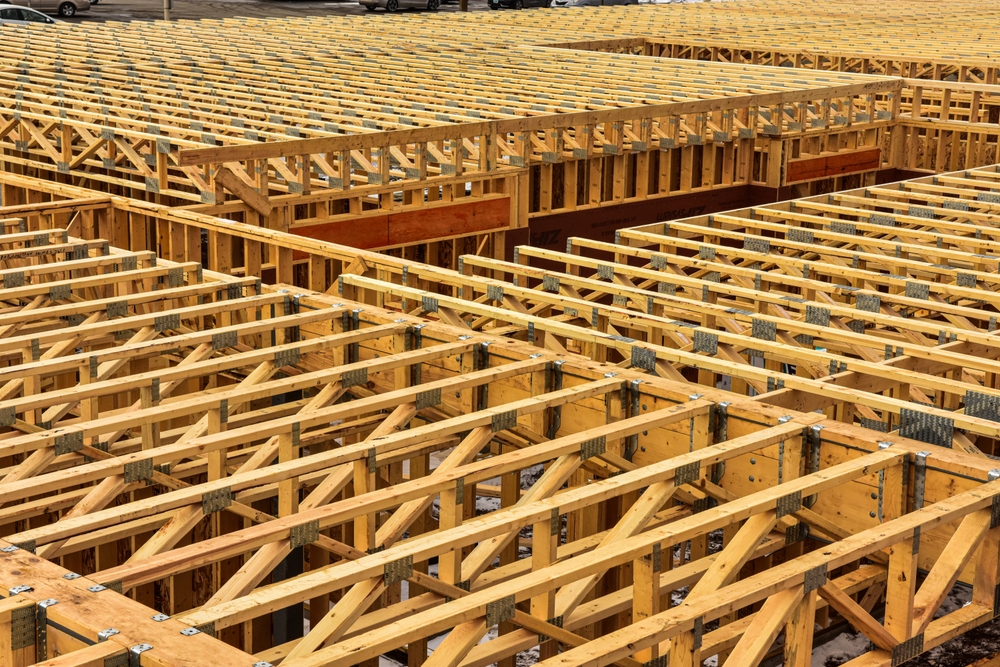
The floor system is a critical element of any structure, and selecting the right approach can significantly impact everything from construction speed to long-term performance. Engineered floor trusses are a go-to solution for contractors because they combine strength, consistency, and efficiency — three advantages that aren’t always possible with traditional floor joists.
Whether the project involves a production home, a large commercial build, or a complex remodel, this article will show you why, when, and for whom engineered floor trusses are the best choice.
What Are Engineered Floor Trusses?
Engineered floor trusses are prefabricated structural components used to support floors in residential, commercial, and industrial projects. Instead of relying on standard lumber sizes, these trusses are designed to meet the specific requirements of each project. They arrive at the jobsite as whole assemblies ready for installation.
Due to their relatively simple assembly and value at non-standard depths, trusses are an economical choice, particularly useful in applications where a structure needs to be built to custom design specifications and with uniform parts.
Compared to traditional joists, engineered floor trusses offer:
- Longer clear spans without intermediate supports
- Open-web designs that simplify plumbing, electrical, and HVAC runs
- Uniform quality thanks to controlled manufacturing environments
- Greater flexibility for custom designs and unique floor plans
Types of Floor Trusses
Not all engineered floor trusses are the same. The right system depends on the scale, design requirements, and performance goals of your project.
Some common options are:
- I-Joist Systems: Standardized engineered floor joists made from laminated veneer lumber (LVL) or oriented strand board (OSB) webs. Ideal for production homebuilding where speed, strength, and material efficiency are key.
- Open-Web Trusses: Custom-engineered trusses built with a web of diagonal and vertical members. They allow for large clear spans and provide open space for mechanical runs, making them popular in multi-family and commercial projects.
- Custom-Designed Floor Trusses: Tailored solutions for complex builds, non-standard depths, or projects that require specific load capacities. Often used in industrial facilities, large custom homes, and remodels where unique dimensions are needed.
None of these options is inherently “better” than the others; it just depends on what will best suit your project needs.
3 Common Engineered Floor Truss Use Cases
Engineered floor trusses are versatile, but certain projects benefit from them more than others. Here are the three use cases where truss systems deliver the greatest value for construction professionals.
1. Residential & Multi-Family Construction
Residential builders and multi-family developers require a solution that enables them to build with speed and precision. Because they’re manufactured to exact specifications, trusses:
- Reduce framing time
- Improve trade coordination for mechanical, electrical, and plumbing (MEP) systems
- Minimize the need for beams and footings due to longer spans
- Provide consistent quality and lower the risk of callbacks
2. Industrial & Commercial Projects
Industrial and commercial contractors deal with wide, open spaces that require strong and consistent floor systems. Engineered trusses excel in these environments because they offer deep spans, fixed dimensions, and fast installation.
For contractors, this means:
- Cost savings on labor and materials compared to onsite fabrication
- Faster turnaround times and reduced downtime for facilities under renovation
- Design flexibility to accommodate heavy equipment or unique layouts
3. Remodels & Additions
Whether you’re reconfiguring a floor plan or adding square footage, trusses can be designed to match existing conditions while meeting new performance requirements. Additionally, because they’re manufactured off-site, floor trusses arrive ready for installation, which limits the amount of time a property remains under construction. For pros, this translates to more efficient project timelines and happier clients.
Top Benefits of Engineered Floor Trusses
Construction professionals choose engineered truss systems over traditional floor joists for several reasons:
- Consistency & Quality Control: Built in a controlled environment, protected from moisture and warping
- Labor Efficiency: Faster installation reduced onsite labor needs
- Material Optimization: Less waste compared to cutting and fitting joists onsite
- MEP-Friendly: Open-web designs specifically make it easy for trades to run utilities without drilling or notching
- Cost Savings: Reduced labor, material waste, and callbacks add up
- Sustainability: Engineered wood products make efficient use of raw lumber resources
Put Engineered Floor Trusses to Work on Your Next Project
Engineered floor trusses provide a proven method to enhance structural performance, minimize labor, and maintain project schedules. Whether you handle residential builds or industrial facility expansions, these systems can help you maintain cost-effectiveness and consistency.
We design and manufacture floor trusses, roof trusses, and wall panels right here in the Midwest at Zeeland Lumber & Supply. We also offer delivery for customers in Michigan and northern parts of Indiana and Ohio. To learn more or partner with us, connect with our team online.