
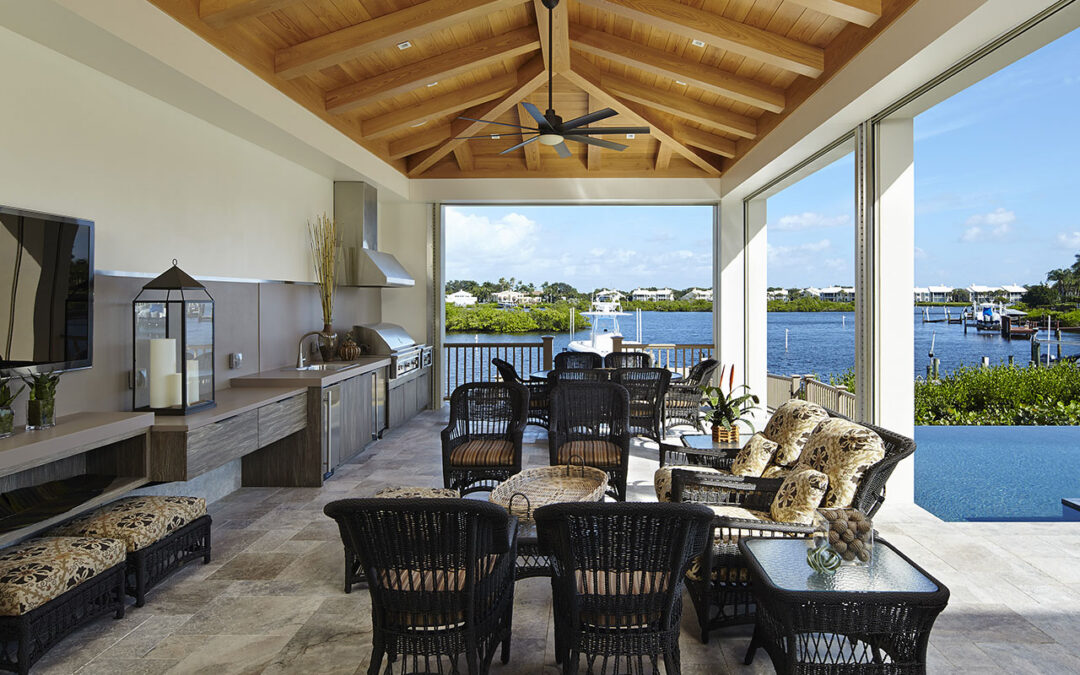
A beautifully designed outdoor kitchen can completely transform the way you use your backyard. What starts as a simple patio can become a gathering place for weeknight dinners, summer celebrations, and quiet mornings with coffee in the fresh air.
But the difference between a space that feels effortless and one that feels forced often comes down to one thing: layout.
A great outdoor kitchen starts with a smart outdoor kitchen layout that balances flow, convenience, and durability. When appliances, prep areas, seating, and storage are thoughtfully arranged, cooking feels natural, guests feel welcome, and the space works just as well as your indoor kitchen — sometimes even better.
In this guide, we’ll explore key planning principles, walk through proven outdoor kitchen layout ideas, and show how high-performance materials like NatureKast weatherproof cabinetry help ensure your outdoor kitchen performs beautifully in any climate.
Why Outdoor Kitchen Layouts Matter
An outdoor kitchen should feel just as intuitive as a kitchen layout inside your home.
When the layout is carefully planned, everything you need is within reach, movement feels natural, and guests can gather comfortably without getting in the way. But when layout is overlooked, even the most beautiful backyard setup can become awkward and inefficient.
A poor outdoor kitchen layout often leads to common frustrations:
- Blocked traffic flow between the grill, prep areas, and seating
- Insufficient counter space near cooking appliances
- Guests clustering in work zones, making it hard to move safely
- Sun, wind, or weather exposure that makes cooking uncomfortable
Unlike indoor kitchens, outdoor spaces must account for open-air elements, yard access points, and entertainment zones. Without proper planning, you may find yourself constantly walking back indoors for supplies, navigating around furniture while carrying hot food, or wishing you had positioned your grill differently.
Thoughtful outdoor kitchen layout plans prevent these issues before they happen. By designing with flow, safety, and comfort in mind, you create a space that works seamlessly for both cooking and entertaining.
The result? A backyard that feels organized, efficient, and inviting — whether you’re hosting a crowd or simply enjoying dinner with family.
Key Planning Considerations for Outdoor Kitchen Layout Plans
Before choosing between L-shapes, islands, or U-shaped designs, it’s important to understand the foundational elements that make any outdoor kitchen layout successful.
Thoughtful planning ensures your space feels cohesive, functions efficiently, and stands up to the elements for years to come.
Zone Planning: Define How the Space Will Work
Every effective outdoor kitchen layout is built around clearly defined zones. Just as an indoor kitchen benefits from purposeful organization, outdoor spaces do too.
Core work zones to define include:
- Cooking Station: Grill, side burners, smokers, or pizza ovens
- Prep & Cleanup: Sink, trash pull-outs, generous counter space
- Cold Storage: Outdoor-rated refrigerator, beverage cooler, ice chest
- Entertainment Area: Bar seating, dining tables, lounge furniture, or even a mounted TV
Keeping prep space adjacent to the grill prevents unnecessary trips inside and improves efficiency. Ideally, you’ll have uninterrupted counter space between appliances so you can move comfortably from prepping to cooking to serving.
Traffic Flow & Safety
A well-designed outdoor kitchen layout accounts for movement — not just for the cook, but for guests as well.
Keep clear pathways between cooking zones and seating areas to prevent congestion. Avoid placing the grill directly in high-traffic walkways or near doorways where people frequently pass through.
Many designers adapt the classic kitchen triangle principle for outdoor spaces:
Grill → Prep Area → Serving/Seating
This simple flow keeps the cooking process organized and reduces unnecessary steps.
Seating Placement & Comfort
Seating can make or break an outdoor kitchen layout. Decide early whether you want:
- Bar-height seating integrated into the island
- A separate dining table nearby
- A combination of both for flexible entertaining
Position seating so guests can interact with the cook without crowding the work zone. Pay attention to sight lines and environmental factors — no one wants to sit facing direct afternoon sun or with their back to strong prevailing winds.
Utilities & Protection from the Elements
Utility planning should happen before cabinets or appliances are finalized. Thoughtful routing of water, gas, and electrical lines improves safety and avoids expensive rework.
You’ll also want to consider:
- Covered structures like pergolas or roof extensions
- Ventilation for grills and smokers
- Drainage and surface slope
- Sun exposure throughout the day
Designing for shade and protection extends the usability of your outdoor kitchen far beyond peak summer months.
Weatherproofing & Material Choices
Outdoor kitchens must withstand rain, humidity, heat, freezing temperatures, and even salt air in certain climates. Using indoor-rated cabinetry or materials not designed for exterior conditions can lead to warping, fading, and premature deterioration.
That’s why material selection is critical to successful outdoor kitchen layout plans.
NatureKast weatherproof cabinetry offers the look of real wood with 100% weatherproof performance.
Constructed from high-density resin and expanded PVC, these cabinets resist rot, cracking, and moisture damage while maintaining their appearance season after season. They’re designed specifically for outdoor environments, making them a reliable, low-maintenance foundation for any layout, whether compact or expansive.
4 Outdoor Kitchen Layout Ideas
Once you’ve considered zones, traffic flow, utilities, and materials, it’s time to explore outdoor kitchen layout ideas that bring everything together. The right configuration depends on your available space, how you entertain, and how you prefer to cook.
Here are four popular outdoor kitchen layout options — each with distinct advantages.
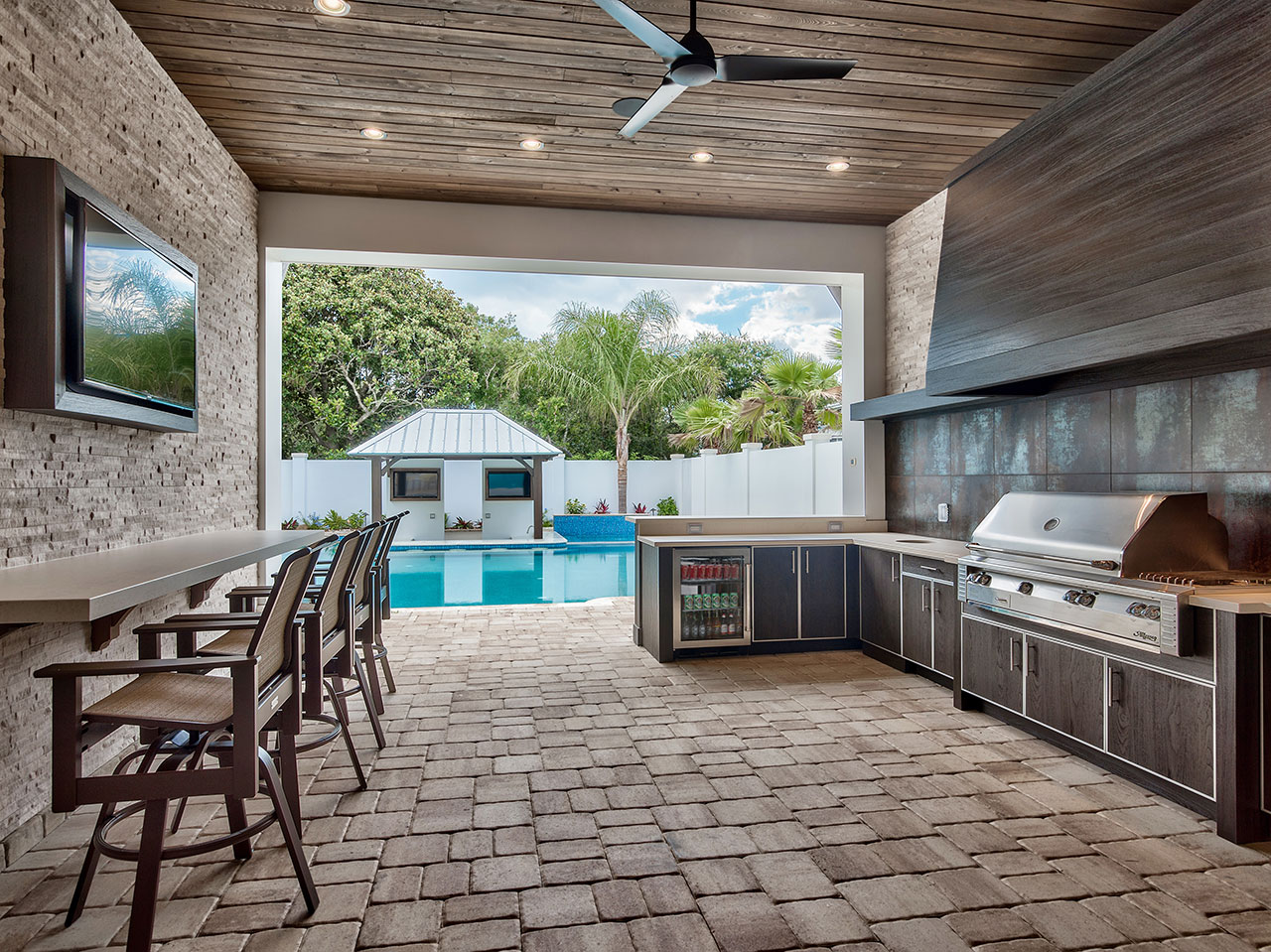
1. Compact L-Shaped Layout
Best For:
Medium-sized patios, corner installations, or homeowners who want efficiency without overwhelming the yard.
Why It Works:
The L-shaped outdoor kitchen layout creates natural separation between cooking and prep areas while keeping everything within reach. It supports an efficient work triangle and keeps traffic flowing on the open side.
Typical Flow Considerations:
- The grill is placed on one side of the L
- Prep space and sink on the adjacent L
- An open side to allow guests to circulate freely
Ideal Appliance & Seating Configuration:
- Built-in grill with counter landing space
- Under-counter refrigerator
- Optional short bar overhang on one side
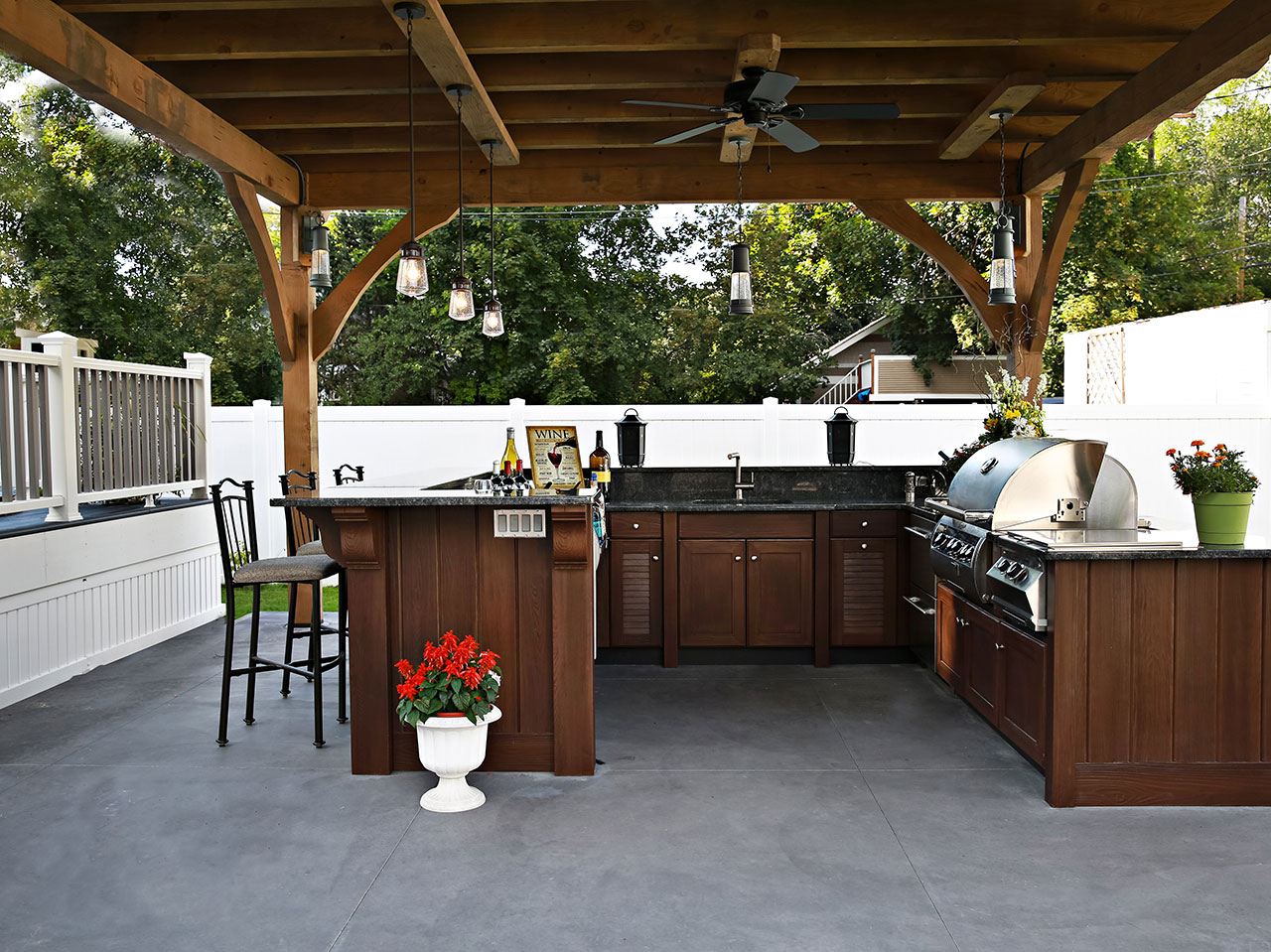
2. Classic U-Shaped Layout
Best For:
Larger backyards and homeowners who frequently host gatherings.
Why It Works:
A U-shaped outdoor kitchen layout creates a defined cooking zone with generous counter space on three sides. It allows multiple cooks to work simultaneously and keeps everything centralized.
Typical Flow Considerations:
- Grill centered on one wall/side
- Prep area and sink on another
- Cold storage and serving space on the third wall
Ideal Appliance & Seating Configuration:
- Built-in grill and side burner
- Sink with trash pull-out nearby
- Seating along the exterior side of the “U”
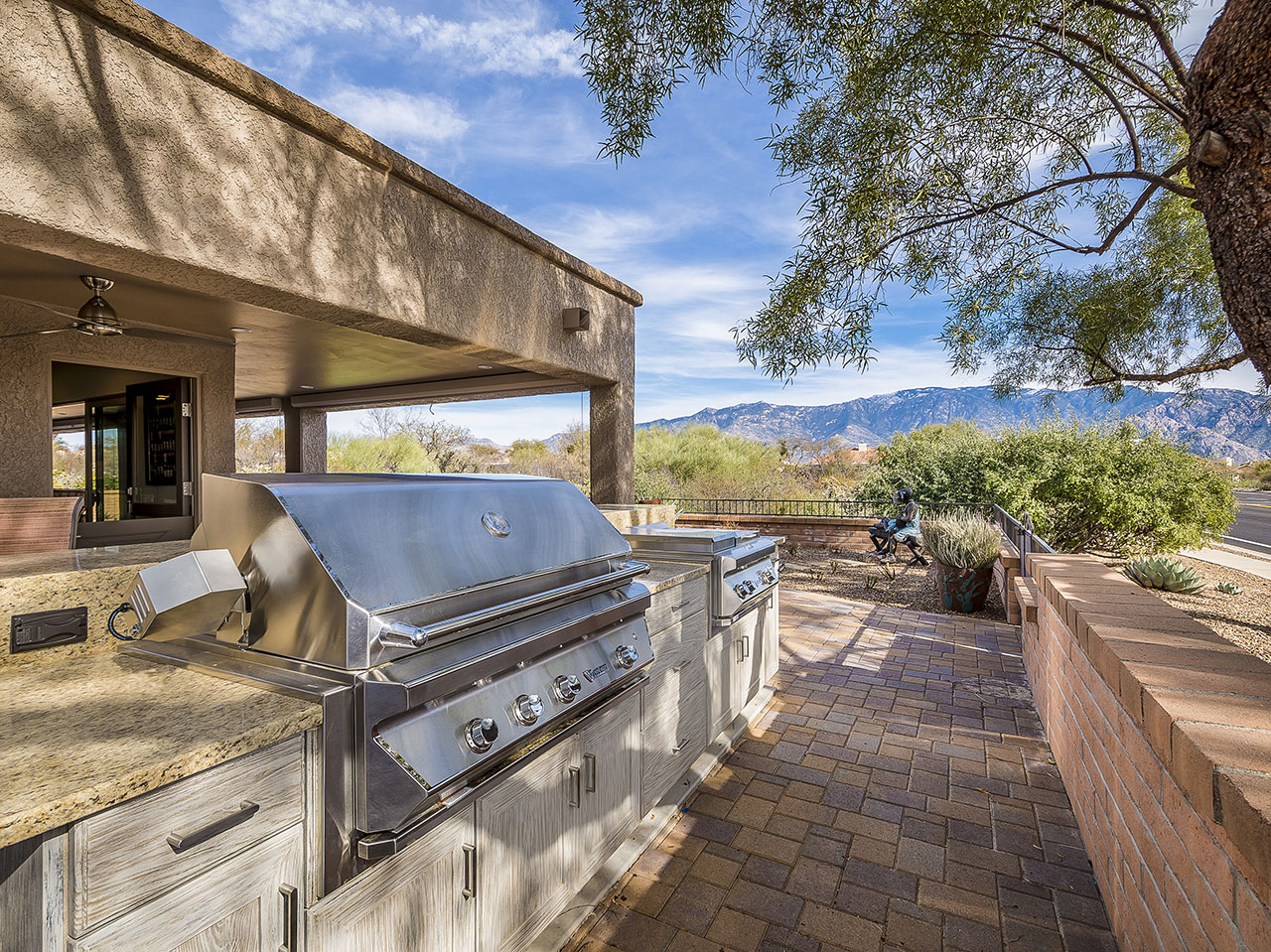
3. Island-Centered Kitchen
Best For:
Entertainers who want maximum guest interaction.
Why It Works:
An island-centered outdoor kitchen layout places cooking, prep, and seating in one central hub. It encourages conversation and makes the cook part of the gathering rather than separated from it.
Typical Flow Considerations:
- Grill and prep space on the working side
- Bar-height seating on the opposite side
- Clear walkways around the island perimeter
Ideal Appliance & Seating Configuration:
- Grill with landing zones on both sides
- Under-counter refrigeration
- Extended countertop overhang for stools
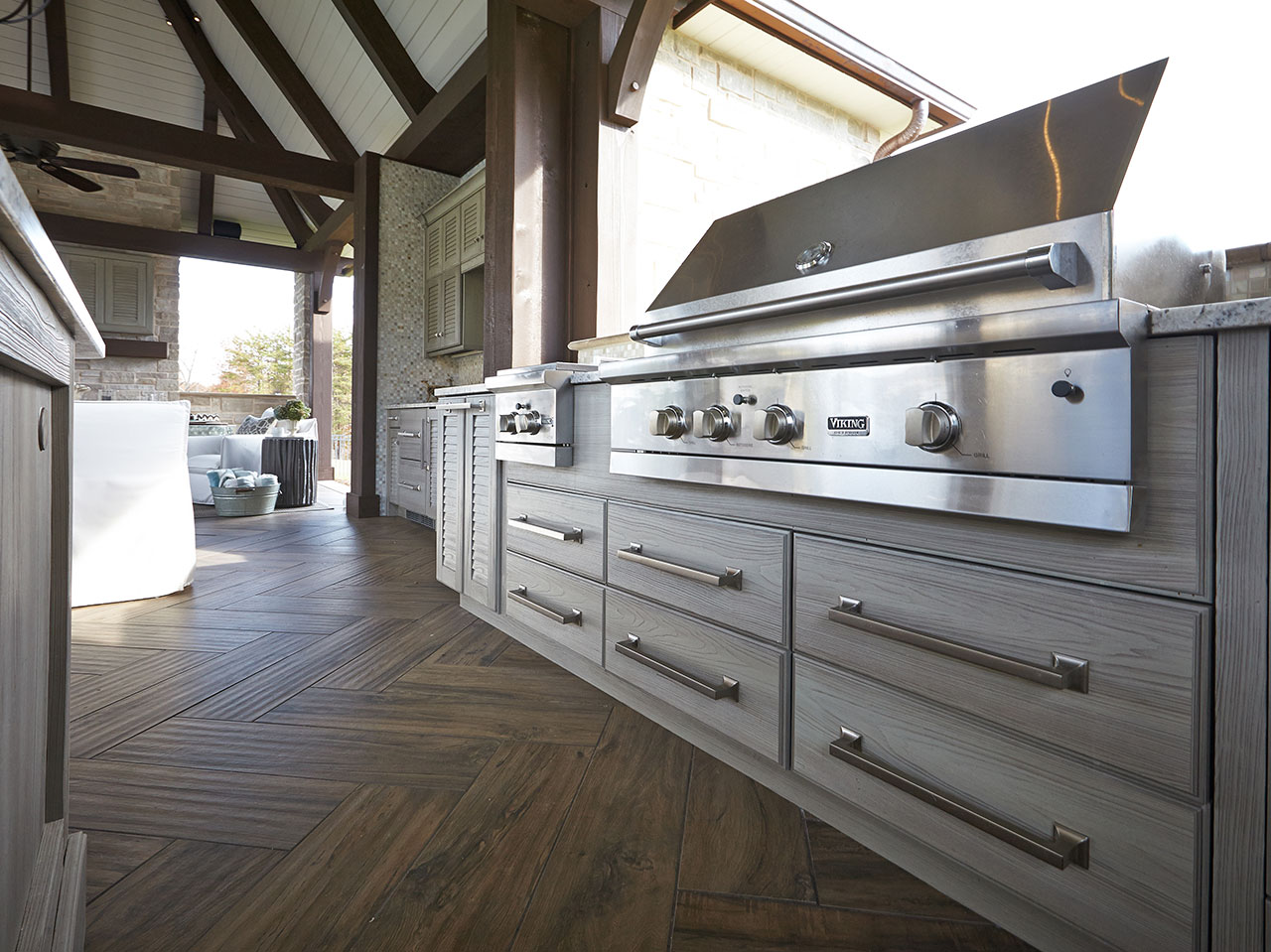
4. Linear Layout
Best For:
Narrow patios, decks, or minimalist designs.
Why It Works:
A linear outdoor kitchen layout keeps everything aligned along a single wall. It’s simple, streamlined, and space-efficient.
Typical Flow Considerations:
- Grill centered with prep space on either side
- The sink is positioned at one end
- Open area behind for circulation
Ideal Appliance & Seating Configuration:
- Built-in grill
- Compact refrigerator
- Separate nearby dining table or lounge seating
How to Finalize Your Outdoor Kitchen Layout Plans
Once you’ve narrowed down your preferred outdoor kitchen layout, the next step is turning that concept into a clear, functional plan.
Careful finalization ensures your space works exactly as intended — both structurally and practically.
Below is a simple checklist to help guide the process.
Outdoor Kitchen Layout Planning Checklist:
| Step | What to Do | Why It Matters |
| 1. Take Accurate Measurements | Measure patio dimensions, door locations, rooflines, and property boundaries. | Prevents overcrowding and ensures appliances and cabinetry fit properly. |
| 2. Map Utility Locations | Identify gas, water, electric, and drainage access points. | Reduces costly rerouting and ensures safe installation. |
| 3. Draft Multiple Layout Options | Sketch at least two to three variations of your outdoor kitchen layout. | Helps compare traffic flow, appliance placement, and seating comfort. |
| 4. Consider Sun & Wind Direction | Note afternoon sun patterns and prevailing winds. | Improves comfort and prevents smoke from blowing toward seating areas. |
| 5. Plan Left- or Right-Hand Workflow | Position prep space on the side that feels most natural to you. | Enhances cooking efficiency and reduces awkward movement. |
| 6. Confirm Appliance Clearances | Review manufacturer spacing and ventilation requirements. | Protects safety and ensures code compliance. |
| 7. Select Durable Materials | Choose outdoor-rated cabinetry, countertops, and hardware. | Ensures long-term performance in changing weather conditions. |
Working through these steps brings clarity to your outdoor kitchen layout plans and helps eliminate surprises during installation.
Why Professional Help Matters
While it’s possible to sketch ideas on your own, partnering with a professional designer adds a level of expertise that elevates the entire project.
A professional designer can help you:
- Optimize traffic flow and safety clearances
- Coordinate utility routing and ventilation requirements
- Balance proportions so the space feels cohesive
- Integrate appliances and cabinetry seamlessly
- Ensure the layout complements your home’s architecture
The result is a layout that doesn’t just look good on paper — it functions beautifully for everyday cooking and effortless entertaining.
The Finishing Touch: Weatherproof Cabinetry
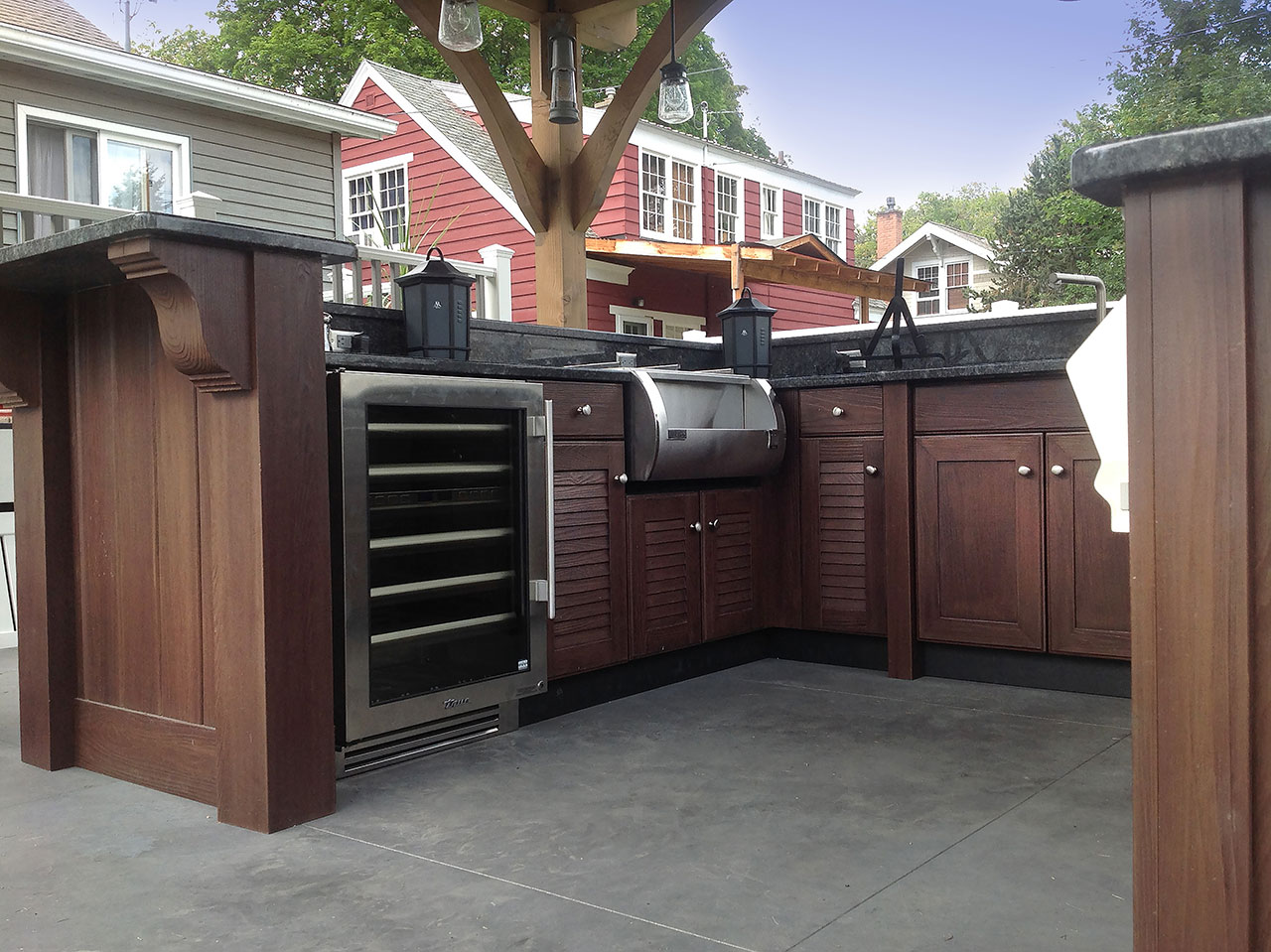
Even the most thoughtfully designed outdoor kitchen layout can fall short if the materials aren’t built to withstand the elements. Cabinetry, in particular, plays a major role in both the performance and appearance of your space.
Because it surrounds appliances, supports countertops, and houses essential storage, it must be durable enough to handle rain, humidity, temperature swings, and prolonged sun exposure.
That’s where NatureKast outdoor kitchen cabinets stand apart.
Key Benefits of NatureKast Cabinetry
- True Weather Resistance: Designed from 100% weatherproof materials to perform in rain, snow, humidity, and heat without deterioration.
- No Rot, Warping, or Cracking: Advanced materials maintain structural integrity season after season.
- Low Maintenance: No staining or sealing required — simply enjoy your space.
- Authentic Wood Appearance: Realistic woodgrain finishes and a range of styles to complement any outdoor kitchen layout idea.
When layout and materials work together, your outdoor kitchen becomes more than a seasonal upgrade — it becomes a lasting extension of your home.
Bring Your Outdoor Kitchen Layout to Life with Zeeland Lumber & Supply
From compact L-shaped designs to expansive U-shaped layouts and island-centered gathering spaces, the best outdoor kitchen layout ideas start with a clear plan. By carefully mapping utilities, accounting for sun and wind patterns, and selecting weather-resistant materials like NatureKast cabinetry, you ensure your outdoor kitchen layout plans function beautifully in every season.
For expert guidance, visit your local Zeeland Lumber & Supply showroom. Our team can help you refine your outdoor kitchen layout, select high-performance materials, and bring your vision to life with confidence.
Your backyard has the potential to become your favorite room of the house — and it all begins with the right layout.