
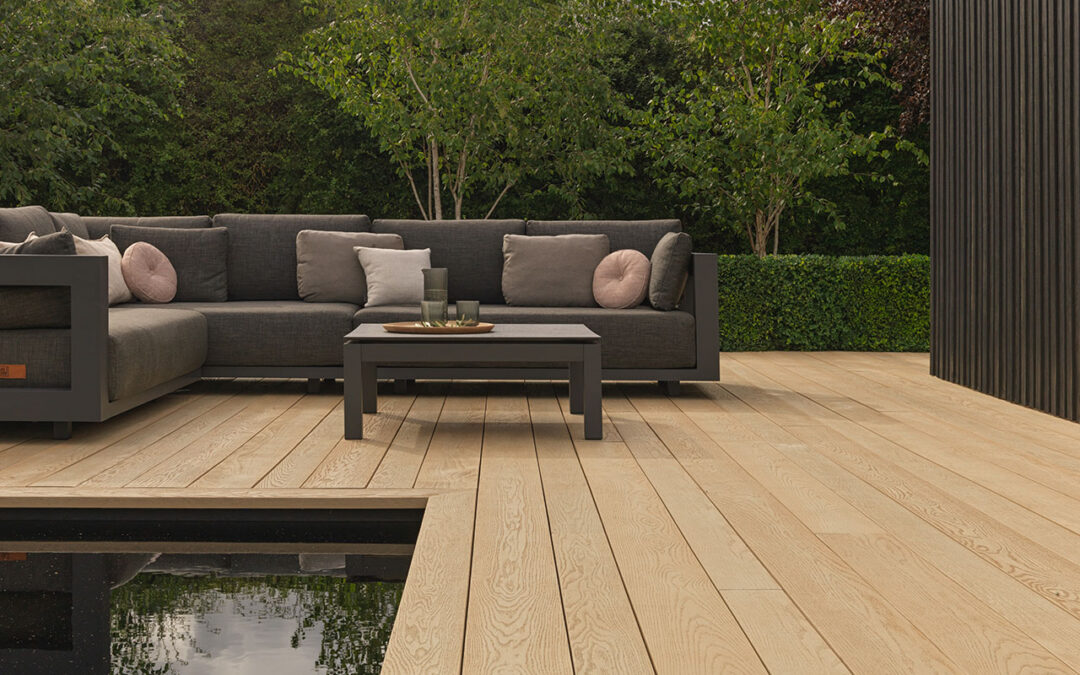
Millboard decking is a 100% polyurethane composite with no wood fiber content at all, hand-molded from real oak timbers to capture authentic wood grain down to the knot and split-grain detail. That distinction matters more than it sounds.
Because there’s no wood fiber in the board, Millboard won’t rot, grow mold, splinter, or fade. That’s a different promise than standard composite decking, which still blends wood fiber with plastic and can show its age over a couple decades.
If you’re researching luxury decking materials for a high-end build, a pool surround, or an outdoor space where appearance has to hold up indefinitely, here’s what you need to know about Millboard.
What Makes Millboard Different From Standard Composite Decking?
Millboard is molded from real oak timbers rather than extruded from a wood-plastic blend. This is why it looks and performs differently than typical composite boards.
Most composite decking, including premium lines, combines wood fiber with recycled plastic, which means the board still contains organic material that can absorb moisture, fade under UV exposure, and degrade over time.
Millboard’s process starts with selecting actual oak “master” boards, then molding a resin-mineral composite (the company describes it as built from limestone and polymer resin) directly against that timber to recreate its surface in painstaking detail.
The result is a board with:
- No wood fiber content, so there’s nothing inside the board to rot, mold, or feed insects
- A surface coating called Lastane that flexes and resists splintering, cracking, and surface wear
- UV stabilizers built into the material rather than applied as a coating, so color doesn’t chalk or fade the way a painted or capped surface eventually can
- Dimensional stability, with manufacturer-rated movement of less than 0.2%, far less than wood or wood-composite blends that expand and contract with humidity
Because every board is molded from real timber, no two boards look identical. Small irregularities, grain breaks, and texture variations repeat the character of the original oak rather than a uniform, repeating pattern. That’s the detail that tends to convince skeptical clients a composite deck is “real wood” until they touch it.
Need help designing your outdoor oasis?
Our experts walk you through the process in our
What Are Millboard’s Decking Collections?
Millboard offers a few core decking collections, each built around a different finish and use case.
Millboard Enhanced Grain
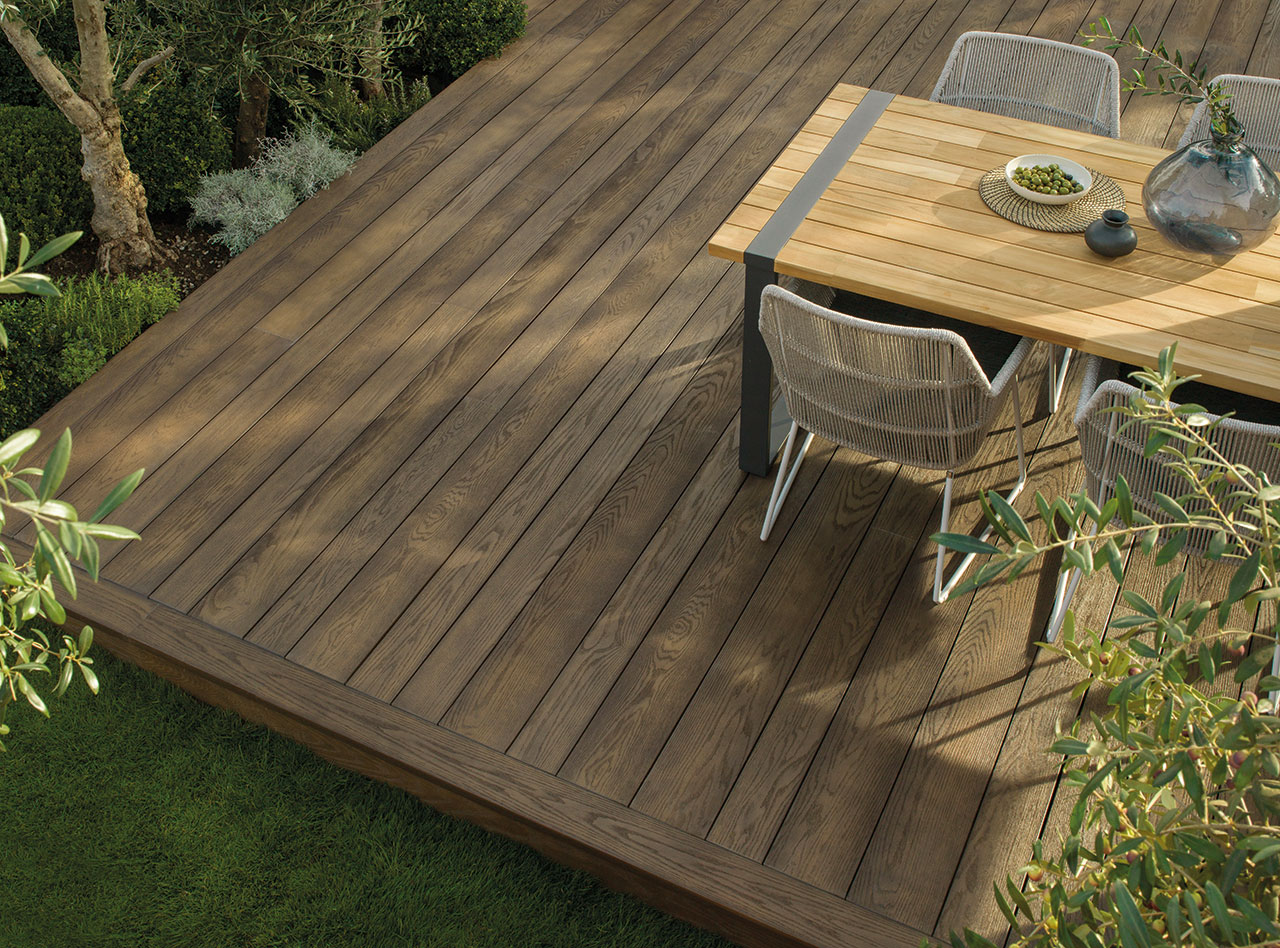
Enhanced Grain is Millboard’s flagship decking collection. It features deep, photorealistic wood grain in tones like Golden Oak, Coppered Oak, and Smoked Oak, with a finish smooth enough for bare feet but textured enough to read as real timber.
Millboard Weathered Oak
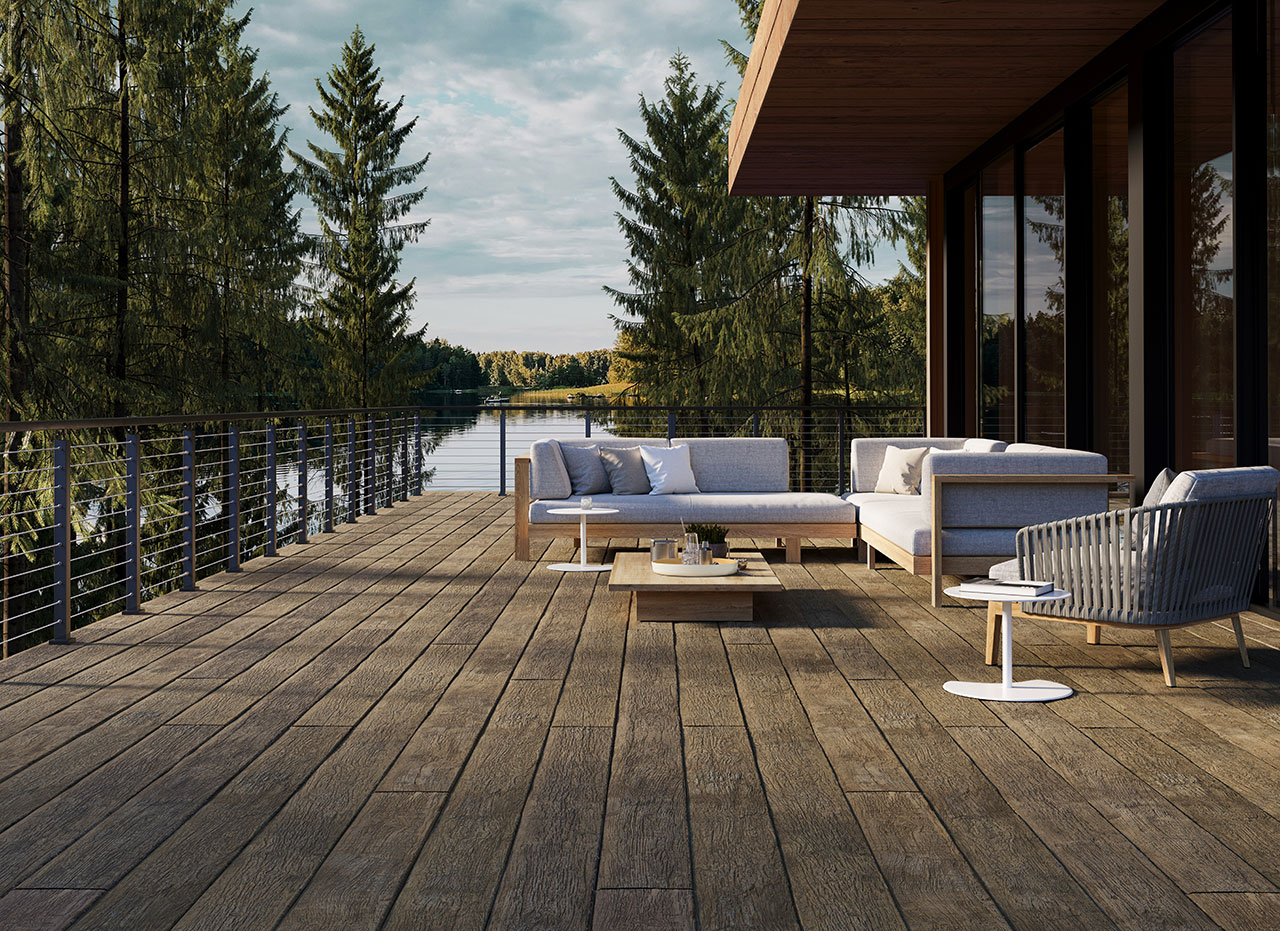
Weathered Oak takes the same Millboard molding process but starts from oak that’s already showing natural graying and texture, giving the boards a driftwood, lived-in look from day one rather than waiting years for a deck to weather naturally (and still perform well as it does).
Millboard Lasta-Grip®
[IMG:
Lasta-Grip® keeps the same wood-grain detail as Enhanced Grain but adds two integrated grip strips molded into the surface for slip resistance, without the rough and abrasive feel of a typical gritted composite strip. That makes it the right call for pool decks, boat docks, and any wet-traffic area where standard composite can become a liability.
Millboard Modello
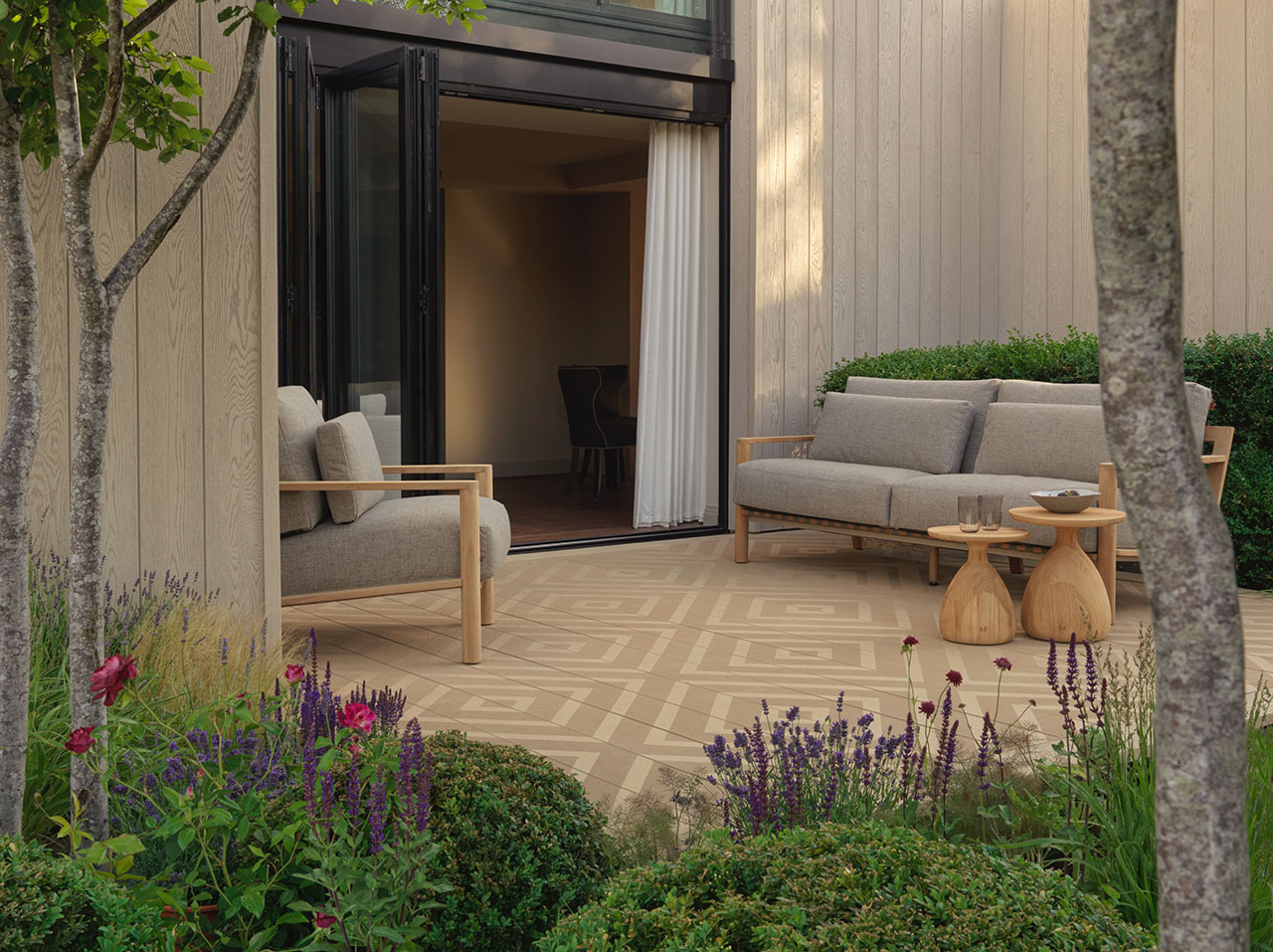
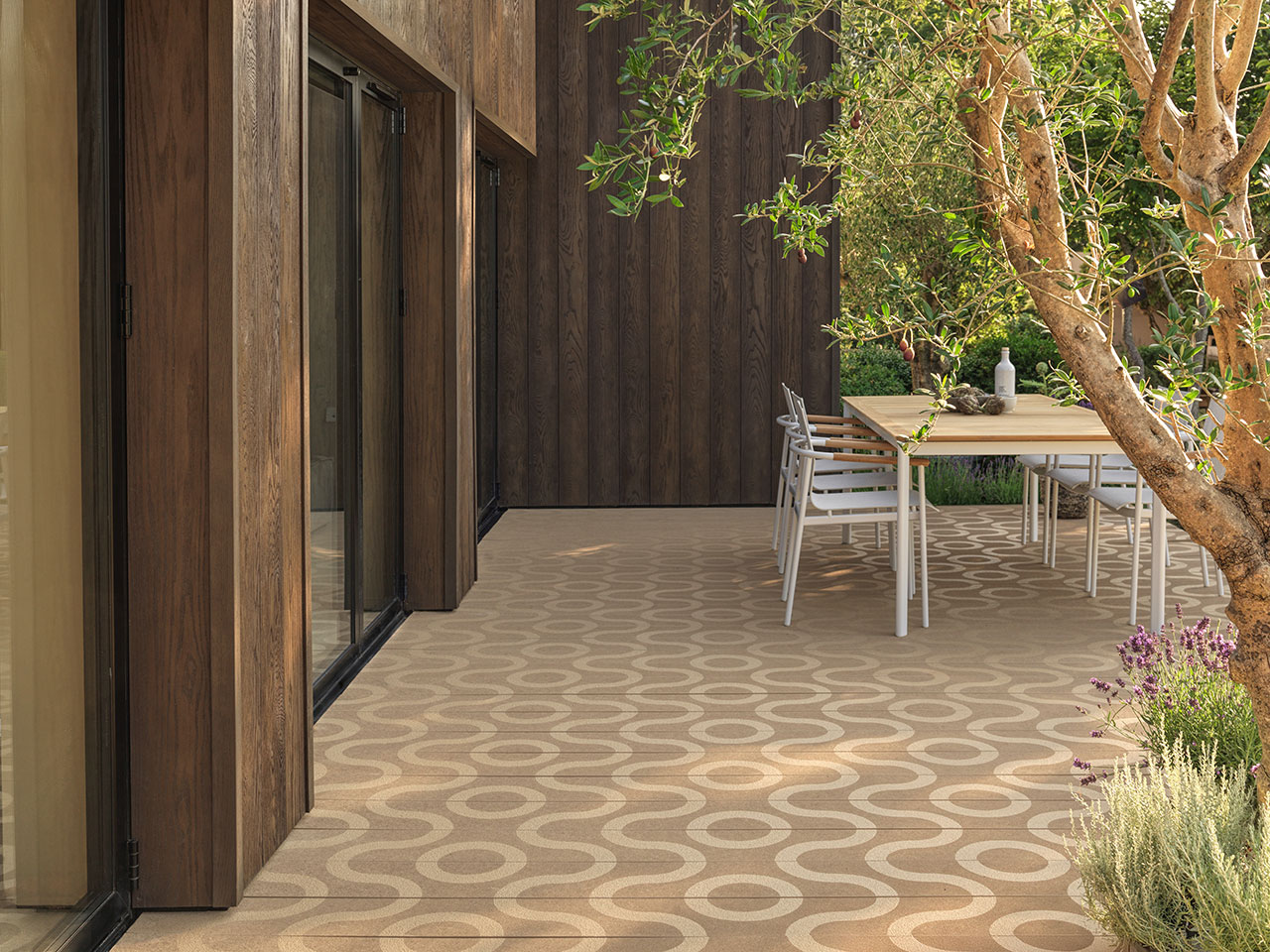
Modello is Millboard’s most design-forward collection. Rather than replicating wood grain like the other collections, Modello comes in two geometric board profiles:
- Linear, with clean, precision-cut lines that suit modern and contemporary builds
- Contour, which introduces flowing curves and organic movement more commonly seen in landscape design
The real design power is in how they’re installed; by simply offsetting the same board in different directions, a single Modello collection can generate over 50 distinct patterns without any complicated subframe modifications.
Across all Millboard decking options, the finish is achieved without paint or a film coating. The color and texture are part of the material itself, which is part of why it holds up to scratching and heavy foot traffic without showing wear lines the way a surface-printed composite can.
How Much Does Millboard Cost? Compared to Other Decking Types
Millboard carries a cost premium over standard composite and pressure-treated wood, often running noticeably higher per square foot. The price difference is the trade-off for eliminating ongoing maintenance and replacement costs almost entirely.
Comparing materials purely on sticker price can miss the actual cost of ownership. Pressure-treated wood is the cheapest material upfront but requires annual or biannual staining and sealing, and individual boards typically need replacing well before the deck’s structural life is over. Standard composite eliminates staining but still has a fade and stain warranty window, after which color can shift. Millboard’s positioning is built around having effectively none of those recurring costs.
| Pressure-Treated Wood | Standard Composite | Millboard | |
| Upfront cost | Lowest | Mid-range | Highest |
| Annual staining/sealing | Required | None | None |
| Typical fade/stain warranty | N/A | 25-30 years | Material doesn’t fade by design |
| Board replacement over 20 years | Likely (rot, splitting) | Rare | Not expected |
| Splinter risk | Yes | Low | None |
| Estimated 20-year cost of ownership | High (labor + materials) | Moderate | Lowest after year one |
The pattern that shows up over a 20-year horizon is that pressure-treated wood’s low entry price gets eaten up by labor and replacement costs, standard composite holds its value well with minimal upkeep, and Millboard’s higher upfront investment is offset by having essentially zero ongoing costs.
For homeowners planning to stay in a home long-term, or for builders working on a forever-home project, that math tends to favor Millboard even with the higher sticker price.
Millboard vs. Trex® Decking: Which One Should You Choose?
For most residential decking projects, Trex® is the better value. It delivers excellent durability, a strong warranty, numerous color options, and a wide range of price tiers at a lower cost than Millboard.
Millboard is the right call if you want the most realistic wood appearance available in a composite and the longest possible lifespan with zero maintenance, regardless of price.
Trex® has built its reputation on giving homeowners and builders flexibility: budget-friendly Trex® Enhance up through premium Transcend®, plus the cooler-running Transcend® Lineage® line, gives you a tier for nearly every budget while delivering a composite board that won’t splinter, warp, or need refinishing.
Millboard plays a narrower role. It’s molded directly from oak rather than extruded from a wood-plastic blend, so the grain detail and per-board individuality go a step further than even premium capped composite. It’s also wood-free, which removes any long-term risk of moisture absorption in the board itself. That combination makes it the natural fit for high-end builds, statement outdoor living spaces, and applications where slip resistance and zero degradation matter as much as appearance.
- Choose Trex® if: You want proven durability and low maintenance at a reasonable cost, with multiple tiers to fit different budgets.
- Choose Millboard if: Realistic wood appearance is non-negotiable, the project is a long-term or luxury deck, or the application (pool, dock, high-traffic wet area) calls for Lasta-Grip®’s slip resistance.
Shop Luxury Decking Options at Zeeland Lumber & Supply
Zeeland Lumber & Supply carries both Trex® and Millboard. If you’re trying to decide which is best for your project, reach out to our team. We can talk about your use case, budget, and other considerations to help you make the best choice.
Contact us online or stop by one of our locations to get started.
Frequently Asked Questions About Millboard Decking
Does Millboard decking get hot in the sun?
Like most composite decking, Millboard can get warmer underfoot than natural wood in direct summer sun, particularly in darker color options. It’s not unique to Millboard—this applies to virtually all composite and PVC decking. Lighter color selections within the Enhanced Grain and Weathered Oak collections help reduce heat buildup.
Is Millboard decking slippery when wet?
Standard Millboard boards perform comparably to other premium composites in wet conditions, but the Lasta-Grip® collection is specifically engineered for slip resistance, with integrated grip strips molded into the board that work in wet, high-traffic areas like pool surrounds and boat docks without feeling rough underfoot.
How does Millboard compare to Trex®?
Millboard is molded from real oak for the most realistic wood-grain appearance available in a composite material and contains no wood fiber, while Trex® offers proven durability across multiple price tiers at a lower cost. Trex® is the better value for most residential projects; Millboard is the choice when realism and longevity matter more than price.
How long does Millboard decking last?
Millboard is designed to perform for decades with minimal degradation, since its wood-free composition eliminates the rot, splitting, and fading that limit the lifespan of wood and wood-fiber composite decking. There’s no staining, sealing, or board replacement built into its expected maintenance routine.
Does Millboard decking need to be sealed or stained?
No. Millboard’s color and texture are part of the material itself, not a surface coating, so it never needs staining, sealing, or refinishing. Routine cleaning with soap and water is all that’s required to maintain its appearance.
Why is Millboard decking so expensive?
Millboard costs more than standard composite because every board is individually hand-molded from a real oak timber master and hand-colored, so no two boards are identical. The material itself is a proprietary resin-mineral composite with no wood fiber, which is more expensive to produce than a standard wood-plastic blend but also eliminates every long-term failure point that makes cheaper decking cost money over time: no rot, no mold, no fading, no board replacement. When you factor in 20+ years of zero staining, zero sealing, and zero maintenance labor, the gap between Millboard’s upfront price and a pressure-treated or standard composite deck narrows considerably.