
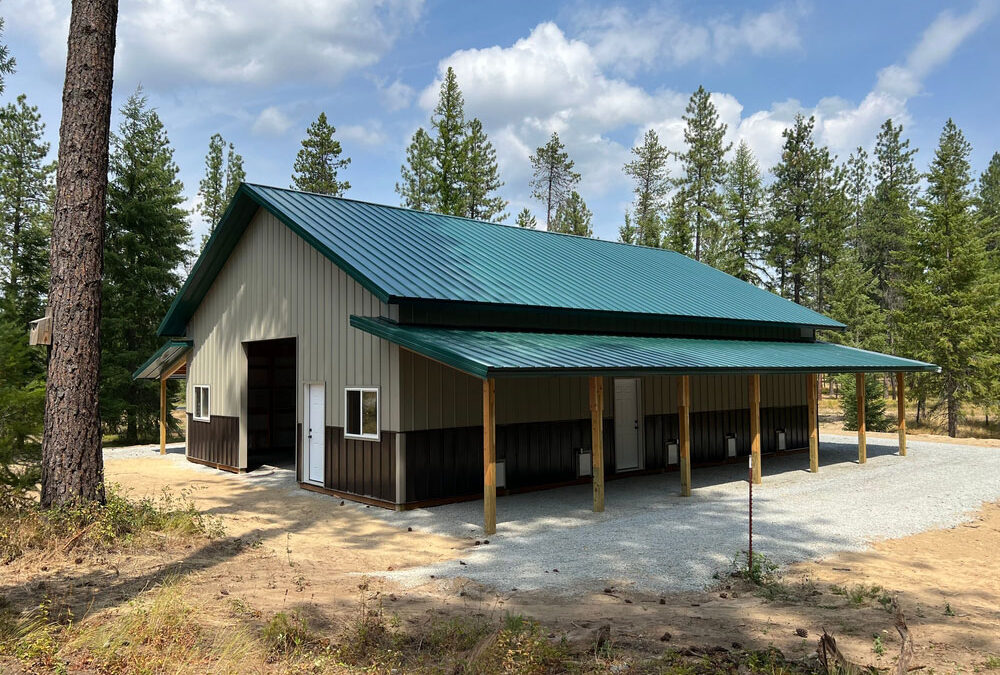
Post-frame construction is a building method that uses large structural posts embedded in the ground or mounted to a slab, combined with engineered roof trusses, to create strong, durable buildings with wide-open interior spaces.
Often referred to as pole barn construction, this method is widely used for agricultural, commercial, municipal, and residential applications because it’s fast, cost-effective, and highly versatile.
If you’ve ever asked, “What is post-frame construction?” or wondered whether it’s the right approach for your next project, this guide breaks it down clearly—how it works, how it compares to stick-frame, and how to build a post-frame building step by step.
How Does Post-Frame Construction Work?
Post-frame construction relies on fewer structural components than traditional framing, but each component does more work.
- Vertical posts (columns) are spaced farther apart than wall studs and serve as the primary load-bearing structure.
- Engineered roof trusses span long distances, eliminating the need for interior load-bearing walls.
- Girts and purlins connect posts and trusses, providing lateral strength and attachment points for siding and roofing.
This system creates buildings that are exceptionally strong while maintaining large, uninterrupted interior spaces.
Post-Frame vs. Stick-Frame: How Are They Different?
Post-frame and stick-frame construction achieve the same goal—safe, functional buildings—but they do it very differently.
Comparison Chart: Post-Frame vs. Stick-Frame Construction
Post-frame construction is typically faster, more affordable, and better suited for projects that require open interior space.
| Feature | Post-Frame Construction | Stick-Frame Construction |
| Structural Support | Large posts spaced ~8’ apart | Studs spaced 16″–24″ apart |
| Foundation | Embedded posts or slab-on-grade | Continuous foundation or basement |
| Interior Layout | Wide-open spans, no load-bearing walls | Interior walls often required |
| Build Speed | Faster overall construction | Longer framing timeline |
| Material Usage | Fewer framing materials | Higher lumber volume |
| Energy Efficiency | Thicker insulation, fewer thermal breaks | More thermal bridging |
Why Are the Benefits of Post-Frame Construction?
Post-frame construction offers measurable advantages throughout the entire build.
#1. Open Interior Space
Because the structure relies on posts and trusses rather than interior walls, post-frame buildings are ideal for:
- Barns
- Workshops
- Garages
- Commercial spaces that need flexibility
#2. Faster, More Affordable Builds
Fewer materials and reduced labor translate to shorter timelines and lower overall costs.
#3. Energy Efficiency
Wider post spacing allows for deeper insulation cavities with fewer interruptions, improving thermal performance compared to traditional stick-frame buildings.
#4. Simplified Foundation Requirements
Unlike traditional buildings, post-frame construction does not require a full basement or continuous foundation. Buildings can be supported by concrete-embedded columns, piers, or a slab-on-grade system.
This streamlined approach reduces excavation time, lowers material costs, and allows projects to move forward faster.
#5. Durable Exterior Options
Steel siding and roofing are common in post-frame construction due to their longevity, weather resistance, and low maintenance requirements.
How to Build a Post-Frame Building: 6 Key Steps
If you’re researching how to build a post frame building, here’s a simplified overview of the process. Smaller buildings may be DIY-friendly, while larger or engineered structures typically require professional crews.
Step 1: Choose the Foundation Approach
Post-frame buildings do not require a basement. Common options include:
- Embedded posts with concrete footings
- Posts mounted to piers
- Slab-on-grade foundations
Step 2: Set and Secure Columns
Columns are placed according to the building plan and secured with concrete to ensure long-term stability.
Step 3: Install Girts and Structural Framing
Horizontal girts and bracing connect the posts, forming the wall structure and reinforcing the frame.
Step 4: Place Engineered Roof Trusses
Pre-manufactured trusses are installed to span the building width, creating strength without interior supports.
Step 5: Add Roofing and Exterior Cladding
Metal roofing and wall panels are most common, offering:
- Durability
- Weather resistance
- Long lifespan
Step 6: Complete Interior Finishing
Interior finishes vary by use—from agricultural stall systems to insulation, electrical, and drywall for conditioned spaces.
What Are Common Applications for Post-Frame Construction?
Post-frame construction is used across a wide range of industries and project types:
- Agricultural Buildings: Livestock barns, equipment storage, and crop facilities benefit from open layouts and durable construction.
- Municipal & Commercial Buildings: Post-frame solutions meet tight budgets and timelines for offices, pavilions, maintenance buildings, and libraries.
- Residential Pole Barns & Garages: Homeowners often choose post-frame construction for workshops, storage buildings, and garage pole barns due to affordability and flexibility.
What Are the Best Brands for Post-Frame Construction Materials?
Quality materials are critical to the success of any post-frame building. Zeeland Lumber & Supply partners with leading manufacturers to ensure reliable performance.
Zeeland Truss & Components
Engineered roof trusses are a defining feature of post-frame construction, and Zeeland Truss & Components specializes in designing truss systems that make wide-open interior spaces possible.
These custom-manufactured trusses are engineered to handle significant spans—up to 84 feet—while meeting local building codes, snow load requirements, and performance standards.
Using advanced design software and precision manufacturing equipment, Zeeland Truss & Components produces trusses tailored to each project’s exact specifications. This ensures structural integrity without the need for interior load-bearing walls, allowing post-frame buildings to remain flexible and adaptable for agricultural, commercial, and residential uses.
Because trusses are fabricated off-site and delivered ready for installation, builders benefit from faster framing timelines, consistent quality, and dependable performance throughout the life of the building.
Metal Sales
With 60+ years of experience, Metal Sales is the nation’s largest manufacturer of metal roofing, wall, and building systems. Their metal panels are a natural fit for post-frame construction thanks to their exceptional durability, long service life, and design flexibility.
Metal Sales offers both exposed-fastener and concealed-fastener systems, allowing builders to balance budget, performance, and aesthetics. Today’s metal panels are far from the dull, utilitarian materials of the past—they are available in a wide range of profiles, colors, and finishes that enhance curb appeal.
Beyond performance and appearance, Metal Sales places a strong emphasis on sustainability. Their metal products are largely recyclable, contribute to energy-efficient building envelopes, and can support LEED and net-zero building goals. Backed by industry-leading warranties and engineered with state-of-the-art fabrication technology, Metal Sales products provide long-term confidence for post-frame construction projects of all sizes.
McElroy Metal
McElroy Metal is a leading manufacturer of metal roofing and wall systems specifically engineered for post-frame and agricultural construction. Known for combining long-term durability with advanced manufacturing techniques, McElroy offers one of the industry’s most comprehensive product lines for builders who demand both performance and visual appeal.
A key differentiator is McElroy’s use of premium paint systems and substrates. McElroy is the only manufacturer to offer Kynar®-based finishes as a standard option, providing superior resistance to fading, chalking, and weather exposure over time. Builders can also choose between galvanized and Galvalume® substrates, allowing materials to be matched to the demands of each project for maximum longevity and corrosion resistance.
McElroy Metal also brings innovation to post-frame construction through features like factory-applied moisture control solutions and advanced forming processes. Technologies such as anti-condensation membranes help manage moisture without the need for traditional vapor barriers, while specialized forming techniques protect panel finishes and preserve long-term appearance.
LP Building Solutions
LP Building Solutions is an industry leader in engineered wood siding and exterior products, known for developing durable, dependable materials that meet the evolving needs of today’s builders. Their products are designed to perform in demanding environments—standing up to rain, snow, humidity, heat, and impact—making them an excellent fit for post-frame construction applications.
GAF
GAF is best known for architectural asphalt shingles, but they also offer metal roofing solutions that work well for post-frame applications—giving builders more flexibility when balancing performance, appearance, and budget. As North America’s largest roofing manufacturer, GAF brings a strong track record of product innovation, durability, and warranty protection across both roofing categories.
GAF’s premium TimberSteel™ Metal Roofing System combines the strength and longevity of metal with an embossed vertical-grain design for enhanced curb appeal. Manufactured with GALVALUME® steel, TimberSteel panels deliver excellent corrosion resistance, long-term color retention, and impact performance—while remaining relatively fast and practical to install.
Frequently Asked Questions: Post-Frame Construction
What Is Post-Frame Construction Best Used For?
Post-frame construction is best suited for projects that require:
- Speed
- Affordability
- Large, open interior spaces
Common uses include agricultural barns, equipment storage buildings, riding arenas, municipal facilities, workshops, garages, and residential pole barns. Because interior load-bearing walls are not required, the layout can easily adapt over time.
Is Post-Frame Construction Cheaper Than Stick-Frame?
Yes, in most cases. Post-frame construction typically costs less than traditional stick-frame construction due to reduced material requirements, faster build times, and simpler foundation needs.
Fewer framing members and shorter labor timelines help keep overall project costs down without sacrificing strength or durability.
How Long Does a Post-Frame Building Last?
Post-frame buildings last for decades when built with quality materials and proper installation.
Engineered wood posts, metal roofing and siding, and modern truss systems are designed to withstand heavy snow loads, high winds, and moisture exposure.
Routine maintenance—such as inspecting fasteners and drainage—helps extend the lifespan even further.
Are Post-Frame Buildings Energy Efficient?
Yes. Post-frame buildings are often more energy efficient than stick-frame buildings because wider post spacing allows for thicker insulation with fewer thermal breaks.
This makes them an excellent option for heated workshops, garages, and conditioned commercial spaces.
Ready to Start Your Post-Frame Construction Project?
Whether you’re still researching, “What is post-frame construction?” or actively planning how to build a post frame building, Zeeland Lumber & Supply is your trusted partner from start to finish.
We supply everything you need—engineered trusses, posts, framing lumber, metal roofing and siding, and expert guidance—so your project stays on schedule and built to last. Our experienced team works with agricultural builders, contractors, municipalities, and homeowners to ensure every project is designed with the right materials, specs, and performance requirements in mind.
Contact Zeeland Lumber & Supply today to speak with a post-frame construction expert or request a custom quote.